
If you’ve been told that a dental implant is the best way to replace a missing tooth, you might be wondering what the process involves. Will it hurt? How long does it take? What happens during each appointment? These are normal questions. And having answers can make all the difference.
Dental implants are widely regarded as one of the most durable and natural-looking options for restoring a smile. They look like natural teeth, feel like natural teeth, and with proper care, they can last a lifetime.
At Chapel Hill Family & Cosmetic Dentistry, Dr. James Furgurson is one of the few local Chapel Hill dentists with Fellowships in the Academy of General Dentistry (FAGD) and the International Congress of Oral Implantologists (ICOI). He also holds a Resnik Implant Institute Fellowship and serves as faculty at Clinical Mastery Series, where he mentors other dentists nationwide.
In other words, when you choose Dr. Furgurson for your dental implant in Chapel Hill, you’re choosing an expert who has dedicated his career to mastering this procedure.
Here’s what you can expect every step of the way.
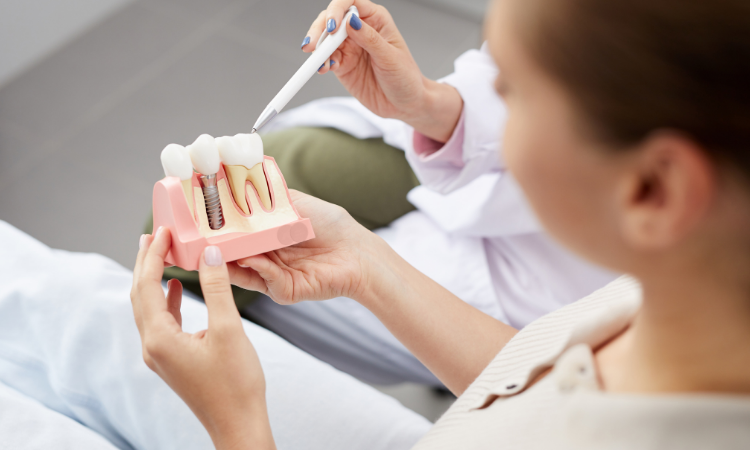
Understanding the Dental Implant Process
A dental implant is a small titanium post that acts as an artificial tooth root. It’s surgically placed into your jawbone, where it fuses with the bone over time. This creates a strong, stable foundation for a crown, bridge, or denture.
The full process takes several months. That’s normal. The waiting period is essential for long-term success.
Step 1: Comprehensive Consultation
Your journey begins with a thorough exam. Dr. Furgurson will take X-rays or 3D scans to assess your bone structure and determine if you’re a good candidate for implants.
What we look for:
- Adequate bone density to support the implant
- Healthy gums free from infection
- Good overall health
If your jawbone is too thin or soft, a bone graft may be recommended before proceeding. This additional step ensures your implant has the stability it needs to last for many years. Dr. Furgurson uses advanced CBCT (Cone Beam CT) technology to create a 3D image of your mouth, allowing for precise planning.
Step 2: The Surgical Procedure
On the day of your implant surgery, you’ll be comfortable. Local anesthesia is used to numb the area, and sedation options are available if you’re feeling anxious.
What happens:
- A small incision is made in the gum to expose the jawbone
- The titanium post is carefully placed into position
- The gum tissue is closed over the site
The procedure itself is typically painless. Most patients report only mild soreness afterward. You may experience minor swelling, bruising, or discomfort for a few days, which can be managed with over-the-counter pain medication and a soft food diet.
Dr. Furgurson will provide detailed aftercare instructions to promote healing and prevent infection.
Step 3: The Healing and Integration Period
One of the most important phases of the implant process is osseointegration. It’s the period during which the implant bonds with your jawbone. It takes about three to six months.
During this time, your implant essentially becomes part of your jaw. This creates the same level of stability and strength as a natural tooth root.
While this healing period may seem lengthy, it’s essential for long-term success. You’ll have follow-up appointments so Dr. Furgurson can monitor your progress. Some patients are fitted with a temporary crown during this time, allowing you to maintain the appearance of a complete smile while the implant stabilizes.
Step 4: Attaching the Abutment and Crown
Once the implant has fully integrated with the bone, it’s time for the next stage.
What happens:
- A small connector piece called an abutment is attached to the implant
- A minor procedure may be required, but healing is typically very quick
- After the gums heal, Dr. Furgurson takes impressions to create your custom crown
The crown is designed to match the shape, size, and color of your natural teeth. Using digital impressions (no goopy trays!), the fit is precise and comfortable.
The crown is then securely attached to the abutment. Your smile is complete.
Step 5: Recovery, Care, and Long-Term Results
Following your implant placement, maintaining good oral hygiene is critical.
Care tips:
- Brush twice daily
- Floss around the implant
- Visit your dentist every six months for checkups
- Avoid chewing hard objects (ice, pens) that could damage the crown
Unlike dentures or bridges, implants don’t decay. But the gums and bone around them still need to stay healthy. With proper care, dental implants can last a lifetime.
Many patients find that they quickly forget they even have an implant. It feels so natural. You can eat your favorite foods, smile with confidence, and enjoy improved oral health.
Learn more about our implant services here:
- Benefits of Dental Implants
- Cost of Dental Implants
- Dental Implant FAQs
- Dental Implant Process
- Dental Implants vs Dentures
- What are Dental Implants
Why Choose Chapel Hill Family & Cosmetic Dentistry?
Elite Credentials
Dr. James Furgurson holds Fellowships in the Academy of General Dentistry (FAGD), the International Congress of Oral Implantologists (ICOI), and the Resnik Implant Institute. He’s also a faculty member at Clinical Mastery Series, where he mentors other dentists nationwide.
Advanced Technology
- CBCT (Cone Beam CT): 3D imaging for precise implant planning
- iTero Scanner: Digital impressions for comfortable, accurate fit
- LiteTouch Laser: Gentle gum treatment with faster healing
Patient-Centered Care
- Comprehensive consultation (90 minutes for new patients)
- Clear explanations of treatment options
- A comfortable, welcoming environment
Dental Implants in Chapel Hill, NC
If you have a missing tooth, your oral health could be at risk. Gaps in your smile can lead to shifting teeth, bone loss, and difficulty chewing. The sooner you seek treatment, the better.
At Chapel Hill Family & Cosmetic Dentistry, Dr. James Furgurson and Dr. Nathan White are here to help you restore your smile with expert implant care.
Call our new patient line at 919-736-6175 or request an appointment online. We proudly serve patients from Chapel Hill, Durham, Raleigh, and throughout the Triangle region.