If you have one or more missing teeth, you have likely noticed more than just a gap in your smile. Simple actions like chewing, speaking, and smiling can feel different. Over time, the teeth next to the gap can begin to shift, and your jaw may even start to change shape.
A dental bridge is a proven, long-lasting solution that does more than fill a space. It restores function, preserves your facial structure, and protects your remaining teeth from shifting. At Chapel Hill Family & Cosmetic Dentistry, Dr. James Furgurson and Dr. Nathan White create custom dental bridges that look and feel like your natural teeth.
Why a Missing Tooth Needs to Be Replaced
When you lose a tooth, the neighboring teeth may tilt or drift into the empty space. The teeth in the opposite jaw may also shift up or down toward the gap. This affects your bite and places stress on your teeth and jaw joints. Teeth that have shifted are harder to clean, which puts them at higher risk for decay and gum disease.
Additionally, the jawbone beneath a missing tooth can begin to shrink. This can change the way your jaw supports your lips and cheeks, altering your facial appearance over time.
A dental bridge prevents these problems by filling the gap and keeping your remaining teeth properly aligned. It restores your ability to chew and speak naturally while maintaining your facial shape.
What Is a Dental Bridge?
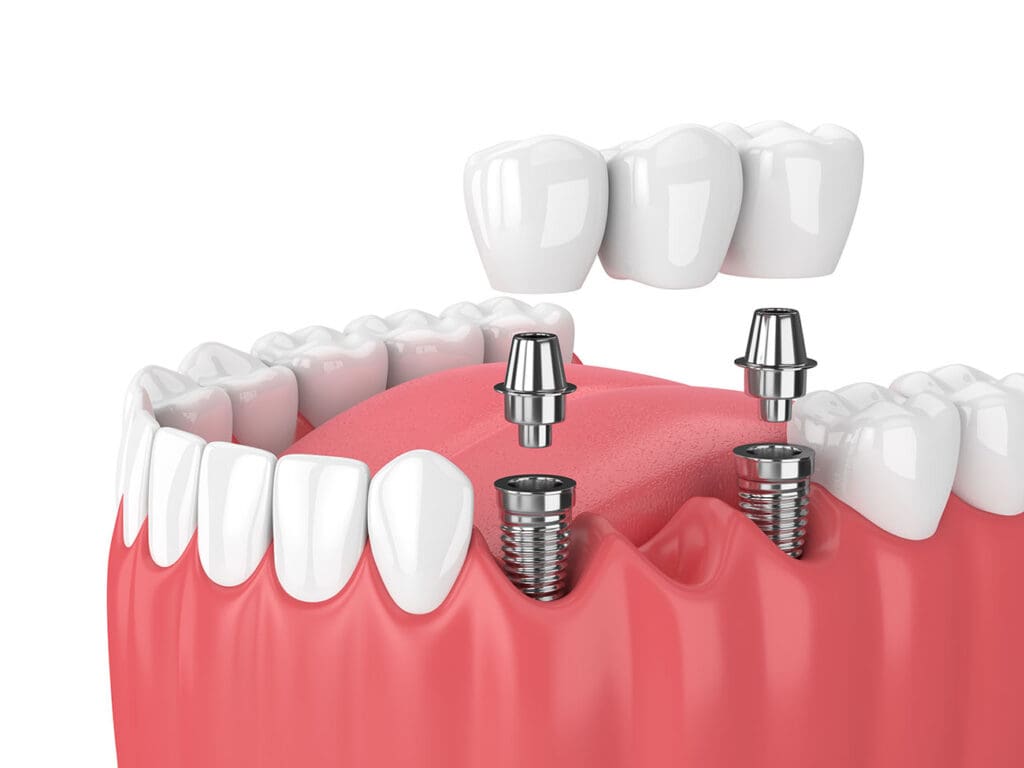
A dental bridge is a fixed prosthetic device that replaces one or more missing teeth. It consists of artificial teeth (called pontics) held in place by dental crowns or implants on either side of the gap. The bridge is custom-made to match the color, shape, and size of your natural teeth. Once placed, it is permanently cemented and cannot be removed without a dentist’s help.
How a bridge works:
- Crowns are placed over the teeth adjacent to the gap.
- Pontics fill the space where teeth are missing.
- The bridge is cemented into place, restoring your smile and bite.
Types of Dental Bridges
Dr. Furgurson and Dr. White will recommend the type of bridge that best suits your needs. The choice depends on the location of the gap, the health of your remaining teeth, and your overall oral health goals.
Traditional Bridge
This is the most common type of dental bridge. It uses crowns on the teeth on either side of the gap to support the replacement tooth (pontic). Traditional bridges are strong, reliable, and look completely natural. They are an excellent option when the adjacent teeth are healthy and strong.
Implant-Supported Bridge
An implant-supported bridge is secured by dental implants rather than natural teeth. Dr. Furgurson, a Fellow of the International Congress of Oral Implantologists (FICOI), is uniquely qualified to place and restore implant-supported bridges. This option is the most stable and durable. It does not require altering healthy adjacent teeth and can help prevent bone loss in the jaw.
Resin-Bonded (Maryland) Bridge
A resin-bonded bridge uses metal or porcelain wings to bond the false tooth to the back of the adjacent teeth. This is a conservative option, often used for front teeth. It does not require crowns on the supporting teeth. However, it has a higher failure rate than traditional bridges.
Cantilever Bridge
A cantilever bridge is anchored on only one side of the gap. This type is used when there is only one natural tooth next to the gap. It is less common today because it can put extra stress on the supporting tooth. It is generally more successful in the front of the mouth where bite forces are lower.
The Dental Bridge Procedure
The dental bridge process typically takes two to three visits. Here’s what to expect:
Step 1: Consultation and Preparation
During your first visit, Dr. Furgurson or Dr. White will examine the area, take X-rays, and determine if a bridge is the right solution. The teeth on either side of the gap are prepared by removing a small amount of enamel to accommodate the crowns.
Step 2: Impressions and Temporary Bridge
An impression of your teeth is taken and sent to a dental laboratory. Skilled technicians create your custom bridge to match the color and shape of your natural teeth. While you wait for the permanent bridge (usually 1-2 weeks), you will receive a temporary bridge to protect your teeth and gums.
Step 3: Final Placement
Once your custom bridge is ready, you will return for a final appointment. Dr. Furgurson or Dr. White will check the fit, make any necessary adjustments, and cement the bridge into place. Your bite and comfort will be carefully evaluated to ensure a natural feel.
The entire process takes about 2-3 weeks from start to finish.
Caring for Your Dental Bridge
A dental bridge is an investment in your oral health and confidence. With proper care, it can last 10-15 years or longer. Good oral hygiene is essential to protect both the bridge and the supporting teeth.
Care tips:
- Brush twice daily with a soft-bristle toothbrush.
- Floss daily using a floss threader or water flosser to clean under the pontic.
- Use a fluoride mouthwash to help prevent decay around the bridge.
- Avoid hard or sticky foods that could damage the bridge.
- Visit us regularly for professional cleanings and exams. We will check the bridge and clean areas you may have missed at home.
Why Choose Chapel Hill Family & Cosmetic Dentistry?
Our Chapel Hill office is trusted by patients throughout the Triangle region for a reason:
- Dr. James Furgurson is a Fellow of the Academy of General Dentistry (FAGD) and a Fellow of the International Congress of Oral Implantologists (FICOI). He has advanced training in implant-supported bridges and complex restorative cases.
- Dr. Nathan White is an adjunct associate professor at the UNC School of Dentistry, bringing a commitment to evidence-based, conservative care.
- We serve patients from Chapel Hill, Durham, Cary, Raleigh, and surrounding communities. Our office is conveniently located near UNC and the I-40/15-501 corridor.
Restore Your Smile Today
A dental bridge is a reliable, natural-looking solution for missing teeth. Don’t wait for the gap to affect your smile, your bite, or your oral health. Contact your dentist in Chapel Hill today.
Dr. Jim Furgurson and Dr. Nathan White offer expert dental care and personalized treatment plans. Call 919-736-6175 or request an appointment online. We’ll help you find the right bridge to restore your smile and confidence.
Serving Chapel Hill, Durham, Cary, Raleigh, and the Triangle region.