
You’ve had a dental bridge for years. Maybe it was the right choice at the time, but it was the only option you were given, and now you’re done with it. Maybe food gets trapped underneath it, the supporting teeth are starting to fail, or it’s getting worse over the years. Are you just tired of it all?
Converting from a bridge to implants is common. Dr. Furgurson and Dr. White do it regularly at our Chapel Hill dental office. However, the process isn’t as simple as swapping one restoration for another. Here’s what’s actually involved, and what to consider before you commit.
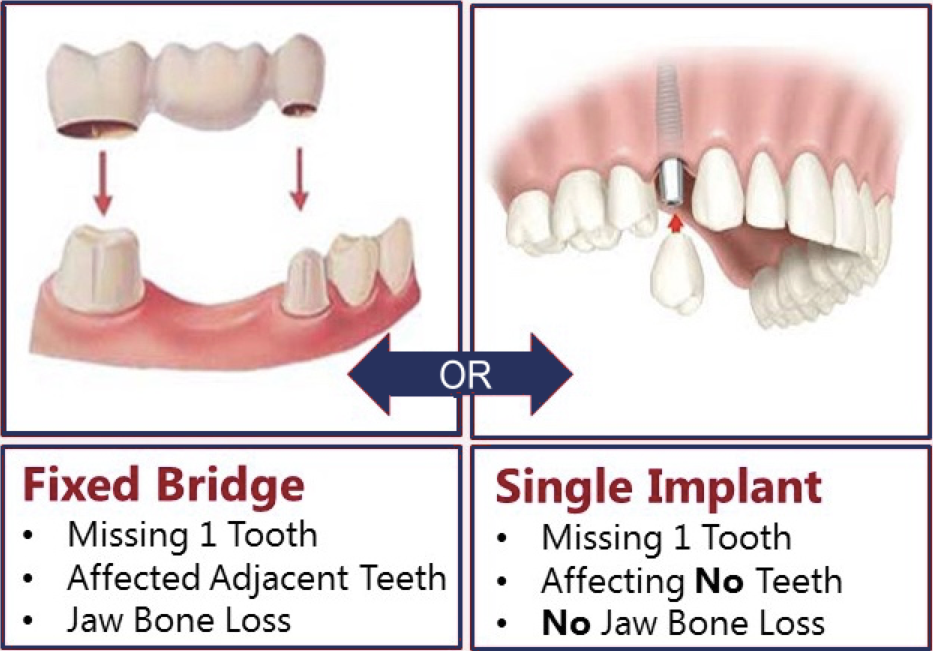
Why Bridges Fail & Why Patients Want Them Gone
A traditional dental bridge replaces one or more missing teeth by anchoring to the teeth on either side of the gap. Dentists prepare those supporting teeth, meaning they remove some natural tooth structure to make room for the crowns that hold the bridge.
This works, and it can last for years. But bridges have some inherent problems:
- They don’t replace the tooth root. The bone underneath the missing tooth doesn’t get the stimulation it needs, so it gradually shrinks. Over time, this can affect the bridge’s fit and the health of the surrounding bone.
- They rely on the supporting teeth. If one supporting tooth fails, you have to redo the whole bridge. And because those teeth were already prepared for crowns, they’ve lost some of their natural structure.
- They’re hard to clean underneath. Food and bacteria can get trapped under the bridge, especially at the pontic (the fake tooth). This can lead to decay on the supporting teeth or gum disease.
- They can look less natural over time. As the gums recede and the bone changes, the bridge can start to look less like natural teeth and more like a restoration.
Patients who come to us wanting to replace a bridge usually mention one or more of these issues. They’re tired of food getting trapped, worried about the supporting teeth, or just don’t like how it looks.
What Bridge-to-Implant Conversion Actually Involves
Replacing a bridge with implants in Chapel Hill depends on a few factors: how many teeth the bridge replaces, the health of the supporting teeth, and the amount of bone in the area.
Here’s the general approach:
- Evaluation: We start with a comprehensive exam, including CBCT imaging to assess bone quality and the position of the supporting teeth. We’ll also evaluate the health of those teeth. If they’re healthy and stable, we may be able to leave them alone. If they’re compromised, we may recommend extracting them and replacing them with implants too.
- Planning: Based on the imaging, Dr. Furgurson will plan the implant placement. If the bridge replaces three teeth, we might use two implants to support a new bridge, or individual implants for each tooth, depending on the bone and bite. If the supporting teeth need to be removed, we’ll account for that in the plan.
- Removing the Bridge: We remove the existing bridge. This is usually straightforward.
- Bone Grafting (if needed): If the bone has shrunk under the bridge, we may need a graft before placing the implants. This adds time but improves the long-term outcome. Dr. Furgurson performs grafting in-house, so you don’t need a referral to another office.
- Implant Placement: We place implants surgically. If the supporting teeth were removed, we do that at the same time or before.
- Healing: Osseointegration takes three to six months. During that time, you’ll have a temporary restoration so you don’t go without teeth.
- Final Restoration: Once the implants have integrated, we attach the abutments and the final crown or bridge. The result looks and functions like natural teeth and doesn’t rely on adjacent teeth for support.
What Happens to the Supporting Teeth?
If the supporting teeth are healthy and stable, we may be able to leave them in place and simply replace the bridge with an implant-supported restoration. In that case, the supporting teeth stay in place, and the implants replace the missing teeth.
If the supporting teeth are compromised, which is common with older bridges, we may recommend extracting them and replacing them with implants. This is a bigger procedure, but it can lead to better long-term results. Those teeth were already prepared for crowns, so they’ve lost some natural structure, and if they show signs of decay or fracture, they may not be reliable long-term.
Dr. Furgurson has advanced training in complex restorative cases, and he’s a Fellow of the Academy of General Dentistry, which requires 500 hours of advanced training. That background matters here, because the decision about the supporting teeth isn’t always straightforward. It’s a judgment call based on the imaging, the teeth’s health, and the patient’s goals.
Dr. White, who’s an adjunct associate professor at the UNC School of Dentistry, brings a conservative approach to the same conversation. If he can preserve the supporting teeth and still get a good result, he’ll do it. If extraction is the better choice, he’ll explain why.
Is Conversion Always the Right Move?
No, and we want to be honest about that. Converting a bridge to implants is a bigger investment, both financially and in time, than replacing the bridge with another bridge. If your current bridge works well and the supporting teeth are healthy, you may not need to change it.
The conversation usually makes sense when:
- The bridge is failing or has already failed
- The supporting teeth are compromised
- You’re unhappy with the appearance of the bridge
- You’re tired of food trapping and difficulty cleaning
- You want a solution that doesn’t rely on the adjacent teeth
- You’re already planning other implant work in the area
If none of those apply, we’ll tell you. We won’t recommend a bigger procedure just because it’s an option.
What About Cost?
We know cost is a concern, and we want to be upfront about how we handle it. We’re an out-of-network, fee-for-service practice. That means payment is due at the time of service, and you’ll file with your insurance for reimbursement. We provide detailed receipts, procedure codes, and documentation to make that process as smooth as possible.
We don’t publish specific price ranges because cost depends on many factors, including how many implants you need, whether grafting is required, whether the supporting teeth need to be removed, and which restoration you choose. During your consultation, we’ll give you a clear, itemized estimate so you know exactly what you’re paying for.
We also offer CareCredit financing and phased treatment plans, so you can spread the cost over time.
What to Do Next
If you have a bridge you’re unhappy with, and you’re wondering whether implants are a better option, the next step is a consultation.
Our office is at 501 Eastowne Drive in Chapel Hill, just off 15-501, minutes from the UNC campus and downtown Chapel Hill. We serve patients from Durham, Cary, Raleigh, Carrboro, Hillsborough, and throughout the Triangle.
Call us at 919-736-6175 or request an appointment online. We’ll take CBCT imaging, evaluate your bridge and the supporting teeth, and give you a clear picture of what conversion would involve for your specific situation.
Learn more about our implant dentistry: