
You’re in your 70s or older, you’ve lost one or more teeth, or you’ve been living with a denture that never quite fit right. You’ve thought about implants, and then you thought, “I’m too old for this.”
That thought is understandable. It’s also usually wrong! Age alone doesn’t disqualify you from getting dental implants in Chapel Hill.
We place implants for patients in their 70s and 80s at our Chapel Hill office, and most of them do very well. What matters isn’t your birthday. It’s your bone health, your medications, your overall medical picture, and whether you’re willing to commit to the aftercare that keeps implants working.
If you’ve been told you’re too old, or if you’ve told yourself that, this post is for you. Here’s what actually matters after 70, and why the answer is often more hopeful than you’d expect.
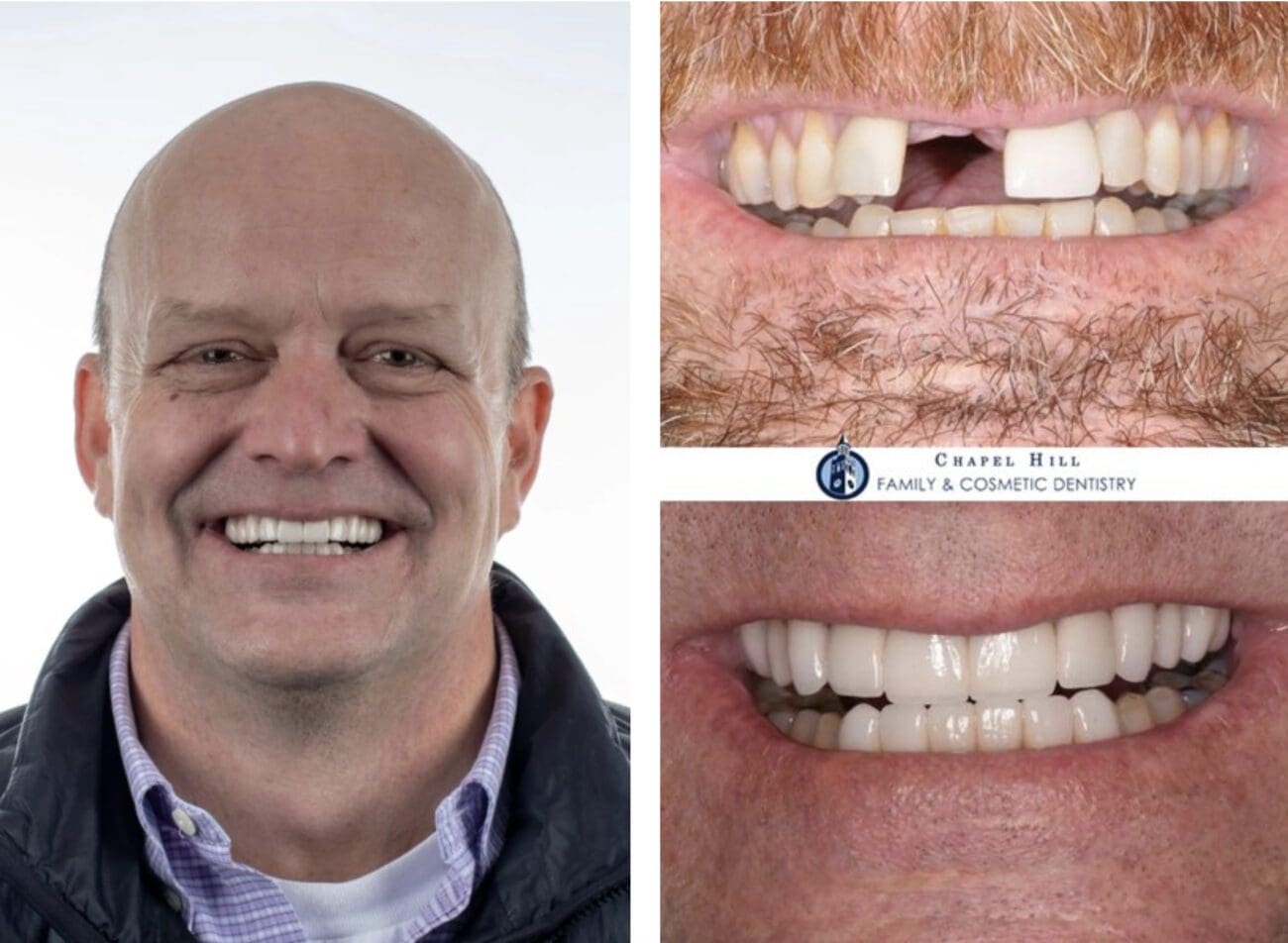
Why the Age Objection Exists
The “too old” idea comes from a few places, and it’s worth addressing them honestly. The idea comes from:
- Outdated Thinking: Decades ago, implant surgery was more invasive, and recovery was harder. The techniques have changed. Modern implant placement is often less traumatic than it used to be, and many patients are surprised by how manageable the recovery is.
- Risk: Older adults often have more medical conditions and take more medications. That’s real, and it does change the planning. But it doesn’t automatically rule out implants. It means the evaluation has to be thorough.
- Time: Patients wonder whether it’s worth starting a process that takes several months when they’re already in their 70s or 80s. That’s a fair question, and the answer depends on what you value. If you’re otherwise healthy and you expect to live another 15 or 20 years, a decade or more of comfortable eating and confident smiling is worth a few months of treatment.
- Fear: Dental anxiety doesn’t fade with age. Many of our older patients are nervous, and we plan for that.
What Actually Matters More Than Age
When Dr. Furgurson and Dr. White evaluate an older patient for implants, they don’t focus on age. They look at factors that predict how well the implant will integrate and hold up:
- Bone Density & Volume: Implants need enough bone to anchor into. After decades of missing teeth, or years of wearing a denture, bone loss is common. That doesn’t disqualify you, but it may mean we include a bone graft in the plan. At our Chapel Hill office, we use CBCT imaging to see your bone in three dimensions, so we know exactly what we’re working with before we plan anything.
- Gum Health: Healthy gums are the foundation for a healthy implant. If you have gum disease, we treat it first. That’s not a delay because it’s a requirement for long-term success.
- Medical Conditions: Uncontrolled diabetes affects healing. Certain autoimmune conditions do too. None of these automatically rule out implants, but they change the plan and the timeline. We’ll review your medical history carefully and coordinate with your physician if needed.
- Medications: This is the one most often missed. Some medications affect bone healing, and some affect bleeding. We need to consider blood thinners, bisphosphonates, and certain other drugs before surgery. Dr. Furgurson and Dr. White will review your medication list and talk through any concerns. In most cases, the medication doesn’t prevent implants, but it may change the approach.
- Healing Capacity: Older adults heal more slowly than younger ones, and that’s normal. It means the timeline might be a little longer. It doesn’t mean the implant won’t work.
- Commitment to Aftercare: Implants need daily care and regular checkups. If you’re willing to brush, floss, and come in every six months, your implant has an excellent chance of lasting. If you’re not, we’ll talk about that honestly.
The Real Question: What Do You Want Your Next Decade to Look Like?
Here’s the question we encourage older patients to ask themselves. It’s not “am I too old?” It’s “What do I want the next 10 or more years to look like?”
If you’re missing teeth and wearing a denture that slips, you probably already know what that feels like. You avoid certain foods, you’re careful when you laugh, and you may have stopped smiling in photos. That’s a real cost, and it adds up over years.
Dental implants change that. They let you eat what you want, speak clearly, and smile without thinking about it. For patients in their 70s and 80s who are otherwise healthy, that’s not a small thing. It’s a meaningful improvement in quality of life.
Dr. White, who’s an adjunct associate professor at the UNC School of Dentistry, brings a conservative, evidence-based approach to this conversation. He won’t recommend implants if the risks outweigh the benefits for your specific situation. If you’re a reasonable candidate, he’ll explain what’s possible and what the plan would involve. Dr. Furgurson, a Fellow of the International Congress of Oral Implantologists, has the surgical training to handle more complex cases, including those involving bone grafting and multiple missing teeth.
What the Process Looks Like for Older Patients
The implant process for an older patient is similar to anyone else’s, with a few adjustments. The consultation is longer and more thorough. We’ll review your medical history, medications, and goals, and take CBCT imaging to assess your bone. We’ll evaluate your gums and your remaining teeth.
The treatment plan also accounts for your specific situation. That might mean a bone graft before the implant, a longer healing window, or a phased approach that spreads the treatment out. It might also mean choosing a simpler restoration, like an implant-supported bridge instead of multiple individual implants, if that’s the right fit for your bone and your goals.
The surgery is typically done under local anesthesia. Sedation options are available if you’re anxious. Most patients are surprised by how comfortable the procedure is. Dr. Furgurson has placed hundreds of implants and is trained to manage complex cases.
Healing takes three to six months, sometimes a bit longer for older patients. During that time, we’ll check in to make sure everything is progressing as it should.
The final restoration is designed to look natural and function well. Dr. Furgurson designs crowns, bridges, and dentures that match your existing teeth and fit comfortably.
What About Dentures?
Some older patients assume that if they’ve worn dentures for years, they’re stuck with them. That’s not true. Many of our older patients come to us because their dentures have become uncomfortable. As the jawbone changes over time, a denture that once fit well starts to slip. The solution is implant-supported dentures, which snap or screw onto implants and stay securely in place.
If you’ve been told you don’t have enough bone for implants because you’ve worn dentures for a long time, that’s worth a second look. CBCT imaging gives us a much clearer picture than traditional X-rays, and techniques like All-on-4 use angled implants to work with the bone that’s available.
The Honest Caveats
We want to be clear about what we can and can’t promise:
- We can’t promise that implants will work for every patient over 70. Some patients have medical conditions or bone loss that make implants too risky or too complex. In those cases, we’ll say so and discuss alternatives.
- We can’t promise that the process will be fast. It takes months, and for older patients, sometimes a little longer.
- We can’t promise that it will be cheap. Implants are an investment, and as an out-of-network practice, you’ll pay upfront and file with your insurance for reimbursement. We’ll give you a clear estimate and talk through financing options, including CareCredit and phased treatment.
- We can promise an honest evaluation. If implants are a good fit for you, we’ll tell you. If they’re not, we’ll tell you, and we’ll help you find the best alternative for your situation.
What to Do Next
If you’re in your 70s or 80s and you’ve been putting off the conversation about implants, the next step is simple. Book a consultation!
Our office is at 501 Eastowne Drive in Chapel Hill, just off 15-501, minutes from the UNC campus and downtown Chapel Hill. We serve patients from Durham, Cary, Raleigh, Carrboro, Hillsborough, and throughout the Triangle.
Call our Chapel Hill dental practice at 919-736-6175 or request an appointment online. We’ll review your situation, show you the imaging, and give you a clear answer about what’s possible. You’re not too old to have a smile you feel good about. You just need an honest conversation about what it would take.
Learn more about our implant dentistry: