For many people, the thought of visiting the dentist triggers real anxiety. Maybe you’ve had a negative experience in the past. Perhaps the sounds, smells, or sensations simply make you uncomfortable. Whatever the reason, you don’t have to let fear stand between you and a healthy smile.
At Chapel Hill Family & Cosmetic Dentistry, Dr. James Furgurson and Dr. Nathan White offer safe, effective sedation dentistry options to help you relax through your appointments. Whether you need a routine cleaning or a complex restorative procedure, we can help you feel at ease.
Call (919) 736-6175 to discuss whether sedation dentistry is right for you.
What Is Sedation Dentistry?
Sedation dentistry uses medication to help patients feel calm, relaxed, and at ease during dental procedures. It doesn’t mean you will be asleep. Instead, sedation reduces anxiety, minimizes discomfort, and often makes lengthy procedures feel much shorter.
The goal is to make dental care accessible to patients who might otherwise avoid it. Sedation can also help you remain still and comfortable during complex treatments, allowing your dentist in Chapel Hill to work more efficiently and precisely.
Types of Sedation Available at Our Chapel Hill Office
Dr. Furgurson and Dr. White offer two primary types of sedation, carefully matched to your anxiety level and the nature of your treatment.
Nitrous Oxide (Laughing Gas): Mild Sedation
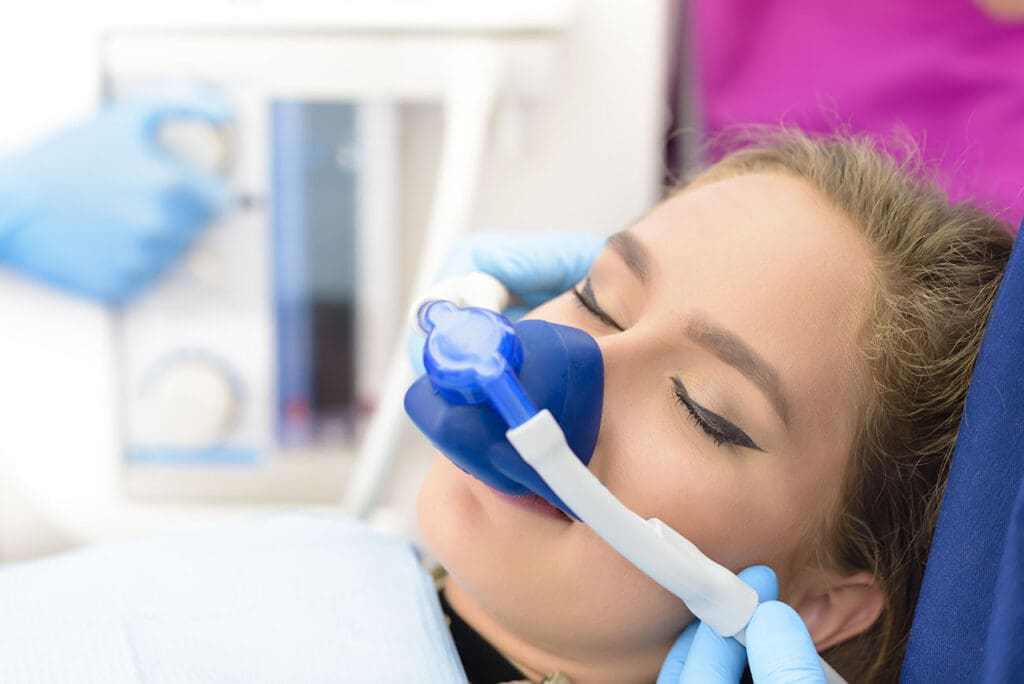
Nitrous oxide is a safe, effective, and widely used form of mild sedation. You breathe it in through a small mask placed over your nose. Within minutes, you’ll feel relaxed, calm, and at ease, but you remain fully awake and aware of your surroundings.
Benefits:
- Takes effect quickly and wears off just as fast
- You can drive yourself home after the appointment
- Safe for children and adults
- Adjustable level of relaxation throughout the procedure
Best for: Mild to moderate dental anxiety, shorter procedures, and first-time sedation patients.
Oral Conscious Sedation: Moderate Relaxation
Oral sedation involves taking a prescribed pill, usually from the benzodiazepine family (like Valium or Halcion). You will take this pill about an hour before your appointment. You’ll feel drowsy but remain conscious and able to respond to instructions. Many patients fall asleep during the procedure and wake up with little memory of it.
Benefits:
- Deeper relaxation than nitrous oxide
- You’ll feel very calm and may not remember the procedure
- Suitable for longer or more complex treatments
Important: You will need a responsible adult to drive you home and stay with you for several hours after the appointment.
Who Is a Good Candidate for Sedation Dentistry?
Sedation dentistry is safe for most patients, particularly those who:
- Experience dental anxiety or phobia
- Have a strong gag reflex
- Need lengthy or complex procedures (root canals, implants, extractions, multiple crowns)
- Have difficulty sitting still or have special needs
- Want to combine multiple treatments into one visit
- Have had traumatic dental experiences in the past
Even patients who have avoided the dentist for years can benefit from sedation. It makes that first step back much easier.
How to Decide if Sedation Is Right for You
Start by asking yourself a few honest questions:
- Does the thought of going to the dentist make you feel tense or panicked?
- Have you avoided dental care because of fear?
- Do you have a low pain threshold or sensitive teeth?
- Do you need a complex treatment that will take a long time?
If you answered yes to any of these, sedation dentistry may be a good fit. The next step is a conversation with Dr. Furgurson or Dr. White. They will review your medical history, discuss your concerns, and recommend the safest, most effective approach for your needs.
Health Considerations and Safety
While sedation dentistry is safe for most patients, it’s important to share your full health history. Certain conditions may require special consideration, such as sleep apnea, heart disease, or respiratory issues. We will also review all medications you take to ensure there are no interactions with sedation medications.
Safety is our priority. We monitor your vital signs throughout treatment to ensure your comfort and well-being. Dr. Furgurson has advanced training in sedation techniques and follows strict protocols to keep you safe.
What to Expect After Sedation
Recovery from sedation is generally quick and straightforward.
- After nitrous oxide: The effects wear off within minutes of removing the mask. You can drive yourself home and resume normal activities.
- After oral sedation: You may feel groggy, drowsy, or slightly disoriented for several hours. Arrange for a responsible adult to drive you home and stay with you until the effects wear off. Most patients feel back to normal by the next day.
- Minor side effects: Some patients experience mild nausea, headache, or dry mouth. These are usually temporary and resolve quickly. We’ll give you clear aftercare instructions to ensure a smooth recovery.
Why Chapel Hill Family & Cosmetic Dentistry?
Our Chapel Hill office is known for compassionate, patient-focused care:
- Dr. James Furgurson is a Fellow of the Academy of General Dentistry (FAGD) and a Fellow of the International Congress of Oral Implantologists (FICOI). These credentials are held by fewer than 2% of dentists. He has extensive experience treating anxious patients and performing complex procedures under sedation.
- Dr. Nathan White is an adjunct associate professor at the UNC School of Dentistry, bringing a commitment to gentle, evidence-based care.
- We serve patients from Chapel Hill, Durham, Cary, Raleigh, and across the Triangle. Our office is conveniently located near UNC and the I-40/15-501 corridor.
Take the First Step Without Fear
You don’t have to let dental anxiety hold you back. Sedation dentistry can make your next appointment comfortable, relaxed, and even pleasant. Schedule a consultation to learn more about your options.
If you believe sedation dentistry might be right for you, we encourage you to request a consultation online or call us at 919-736-6175.
Serving Chapel Hill, Durham, Cary, Raleigh, and the Triangle region.